
Deepika: One Family, Three Journeys of Learning
Forced to drop out of school early, Deepika now supports her children’s learning while growing her own skills
Thriving learning environments do more than support individuals, they make change sustainable across families and communities. In a small household in Assam, where weaving “mekhela sador”—the traditional Assamese attire—is the family’s main livelihood, this became true for a mother and her two children.
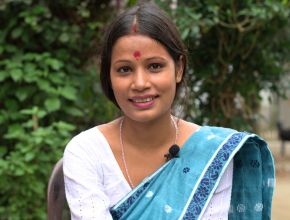
There was a time when learning felt distant for all three. The children struggled to keep pace in learning, while their mother, Deepika, carried her own unfinished academic journey. She had left school in Grade 9 due to her mother’s illness and married young. Confidence was fragile, opportunities were limited, and books had little place in everyday life.
With the right support and guidance from Pratham, that shared struggle slowly began to change.
In 2022, Deepika’s daughter Dimpi, then in Grade 3, was falling behind after prolonged school closures during the COVID-19 pandemic. Her younger brother, Debraj, was just beginning his learning journey.
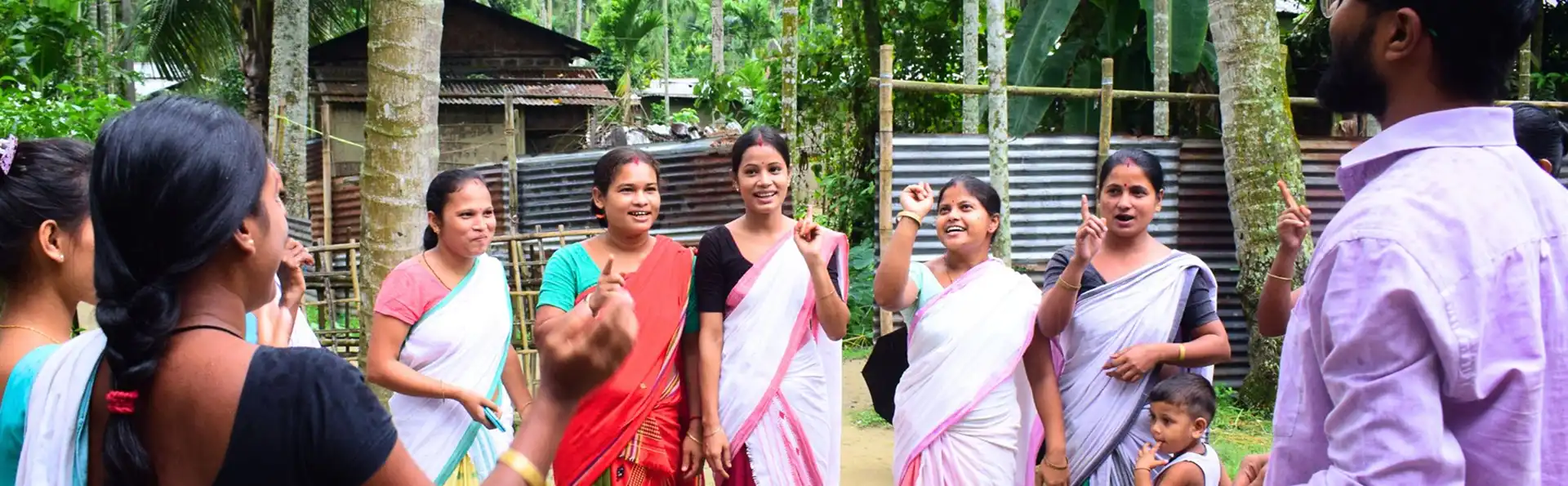
At this point, Pratham’s support opened new doors for both Deepika and Dimpi. Dimpi joined a Pratham learning camp, where children were grouped according to their current learning levels, across grades or within the same class, and taught through simple, engaging activities. At the same time, Deepika became part of a Pratham’s Mothers’ Group, where she learned how to actively participate in and support her children’s learning and development.
Gradually, learning moved beyond classrooms and into the home. Deepika, once hesitant to speak during Mothers’ Group meetings, began participating more confidently. Over time, she became a leader mother, supporting other women in her village to engage in their children’s learning journeys.
Today, Dimpi is in Grade 5. She reads fluently, solves maths problems with confidence, and participates actively in class. She is also part of Pratham’s Children’s Club, which fosters peer-to-peer learning among children in Grades 3-8, who regularly meet in groups to participate in engaging reading and math activities, while also exploring art, craft, and drawing. Debraj (Grade 1), too, is doing well academically, supported by the nurturing learning environment that now thrives at home.
Over time, Deepika also completed a beautician course through Pratham’s Education for Education (EfE) initiative for volunteers and now offers basic make-up services in her neighbourhood. Along with this, she continues her weaving work and remains actively involved in community initiatives.
Deepika’s story is more than a family’s journey—it reflects what becomes possible when learning is nurtured at home and shared across generations and communities.


