
Kruti: A Mother on a Mission
Kruti stepped beyond her home to empower mothers to actively support their children’s early learning
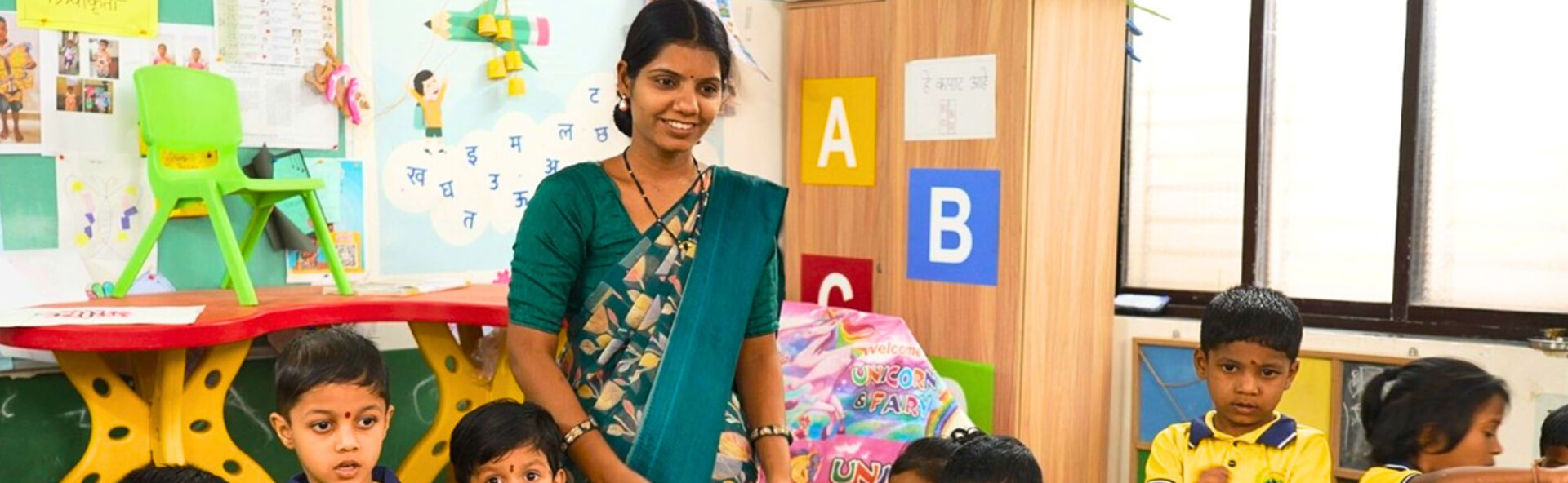
Kruti, a mother of two, lives in Maharashtra. She is a graduate but for a long time, her world revolved around her home and two children. Kruti wanted to do more but didn’t know where to begin. Then one morning in 2024, while dropping her daughter at the Anganwadi, she met a Pratham member who asked if she could volunteer. Kruti readily agreed.
“Teaching, it seems, is in my blood. My father was also a teacher and I always felt drawn to it,” she says. While volunteering at the Anganwadi, Kruti discovered something powerful: children can learn so much through play-based activities. She also realised that mothers aren't just caregivers—they are their children's first teachers and should be active participants in their learning journey.
“I never knew learning could happen using simple household items. Pratham taught me this and it benefitted my children a lot,” she shares.
Kruti felt that more mothers should know this and with Pratham's support, she formed a Mothers' Group with four mothers in her neighbourhood. They named it ‘Sonchafa’—the ever-fragrant, ever-blossoming flower.
Pratham mobilises and supports thousands of Mothers’ Groups, part of Pratham’s Early Years programs, at the community level to actively involve them in their children’s early learning. The groups meet weekly to discuss the idea videos and messages that are shared with mother leaders via WhatsApp. These self-explanatory videos package learning activities that mothers can easily practise at home, preparing children for schooling and learning. Through these groups, mothers also learn from each other, solve problems together, and build strong bonds.
The initial days were tough. Kruti and the other mothers faced opposition from their families. “My husband and father-in-law thought we were just finding an excuse to step out of the house every week," she recalls. But as they saw how Kruti engaged her children at home and how much the children were learning through play, their resistance softened.
Even at the group meetings, the first few sessions were not very encouraging. The mothers sat with their heads down, hands folded in their laps. When Kruti asked questions, she was met with silence. When she encouraged them to share ideas, they shook their heads.
So Kruti started small. She demonstrated simple activities such as sorting vegetables by colour, counting dal grains, tracing letters in rice spread on a plate, and making shapes with leftover chapati dough. Gradually hesitant hands reached for the materials and uncertain voices began to speak. Slowly, week by week, meeting by meeting, the silence broke.
“One mother once brought leaves from her courtyard for a counting game. Another created a story about a village girl who became brave. A third invented a sorting activity using bangles and buttons,” Kruti shares proudly.
Today, Kruti is known as the Leader Mother of ‘Sonchafa’ in her neighbourhood. She plans weekly meetings, collects learning materials, prepares demonstrations, and ensures every voice is heard.
But that's not all. Kruti has a vision: she wants women to be educated and mothers to actively engage in their children's early years—building their children's futures and their own confidence in the process.
“If more mothers get the opportunity to learn and empower themselves this way, it will bring about a revolution,” she says.