
Shabana: A Mother's Journey from Worry to Confidence
Once hesitant to leave his side, Shabana now sees Arhaan included and thriving
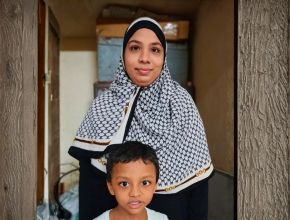
Every morning, Shabana watched children walk into the neighbourhood Anganwadi and wished her five-year-old son, Arhaan, could be one of them. She worried that in a classroom full of children who communicated easily through words, he might not receive the understanding and support he needed to settle in and learn. Repeated relocations for work had also caused the family to miss the school admission window, delaying his enrollment.
Arhaan has a speech impairment since early childhood and communicates mainly through gestures, facial expressions and actions rather than words. He lives in Mumbai with his parents and elder brother. His father works as a daily wage labourer while Shabana manages the household.
The Anganwadi offered Arhaan an opportunity to continue learning while the family waited for a school admission, but he attended only occasionally. Unsure whether he would be able to manage without her, Shabana often stayed with him at the centre. Between caring for two children and managing the household, it was also difficult for her to bring him regularly.
At home, communication was often one-sided. Arhaan found it difficult to understand and follow everyday instructions, making routine tasks challenging. He rarely helped with household chores and depended heavily on his family for daily activities.
In 2025, while working with the Anganwadi in the community, the Pratham team noticed Arhaan's irregular attendance. They visited the family, listened to Shabana's concerns, and encouraged her to send him more regularly, assuring her that with the right support, she would see gradual change.
As part of our long-standing partnership with the Department of Women and Child Development, Government of Maharashtra, in the early years space, Pratham supports Anganwadi workers and early grade teachers to assess the learning needs of children with disabilities and use inclusive, child-centred teaching practices. Parents are also engaged through home visits, monthly meetings and WhatsApp groups covering child development, home-based support and referral services.
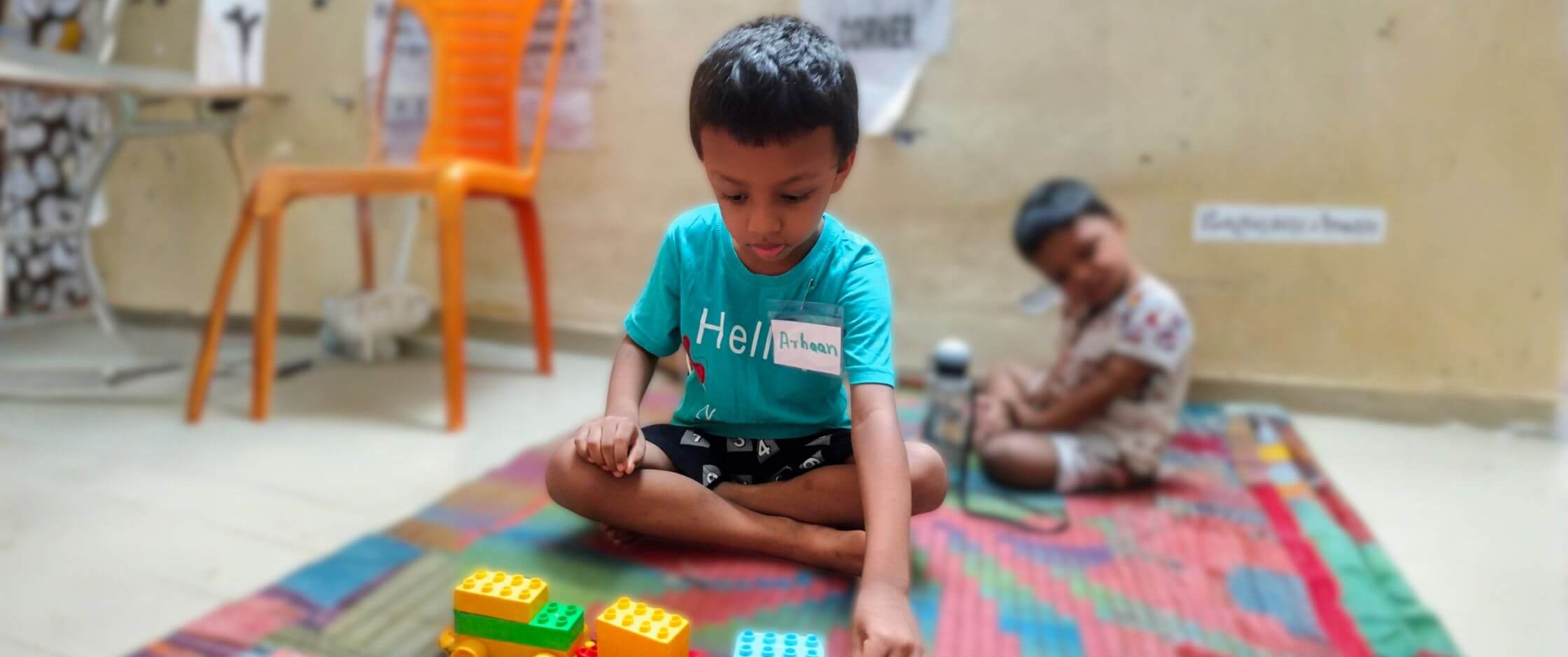
When Arhaan began attending regularly, he initially preferred sitting near the entrance of the Anganwadi. He cried often, avoided group activities and communicated very little. Gradually, he became comfortable observing and then participating in daily routines. When the Anganwadi worker introduced a simple communication board, Arhaan began expressing his needs through pictures, gestures, facial expressions and lip reading.
Over time, regular participation in inclusive classroom activities helped Arhaan understand the idea of two-way communication. As his interactions with adults and peers increased, he also began understanding and responding to simple instructions. This change gradually extended beyond the Anganwadi into everyday life at home.
Shabana soon noticed meaningful changes in her son's everyday behaviour. “Earlier, Arhaan would not understand when I asked him to do simple things. Now, if I ask him to buy something from the nearby shop, he goes on his own, brings back the correct items and even handles the money confidently. He also helps me with small chores at home," she shares.
He now enjoys accompanying his elder brother, learning new ideas, communication skills and everyday concepts through play and shared activities.
As Arhaan's confidence grew, so did Shabana's. She became comfortable enough to leave him at the Anganwadi on his own and, encouraged by his progress, began motivating other parents of children with disabilities in her community to enrol their children as well. For the first time, she felt that the Anganwadi was adapting to Arhaan's needs, rather than expecting him to adapt alone.
The change became visible in small but meaningful moments. One morning, Arhaan picked up a rattle from the shelf and gently shook it towards another child nearby. The Anganwadi worker recognised what he was trying to communicate and encouraged the two children to explore the activity together, allowing the interaction to develop naturally.
Today, Arhaan attends the Anganwadi regularly, learns alongside his peers and communicates with growing confidence. His family's search for a school place continues alongside the progress he continues to make at the Anganwadi.
For Shabana, the journey has been about much more than finding a place for Arhaan to learn. It has been about trusting that her son would be understood, included and given the opportunity to grow in his own way. Arhaan's story reminds us that when children are met with patience, meaningful communication and the right support, they do not just get included, they get the chance to belong.